



English
Intent
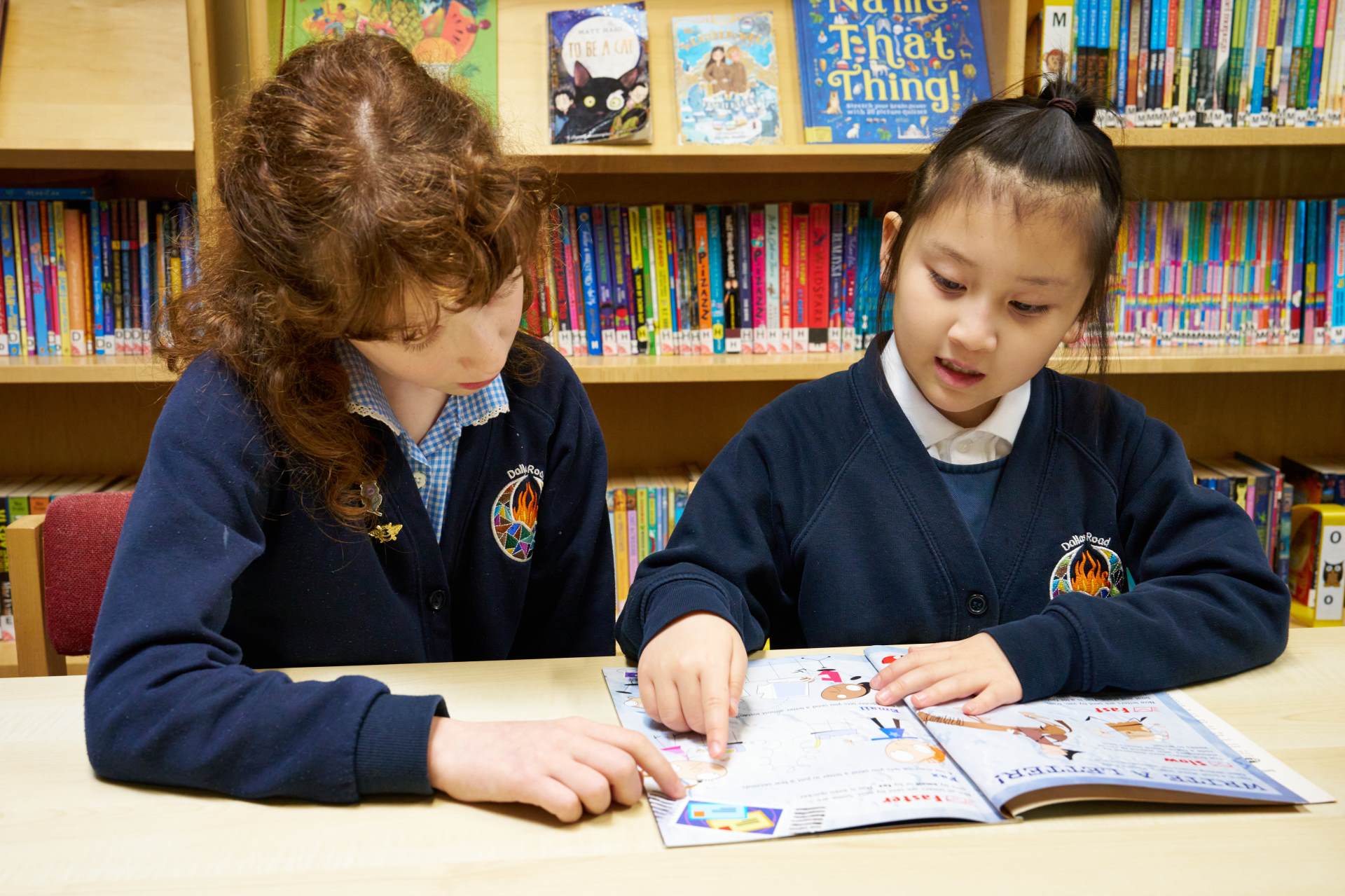
At Dallas Road, our intent is to provide a creative, ambitious and inclusive English curriculum that inspires and motivates pupils, preparing them for life in a culturally diverse and ever-changing world. Our curriculum is designed to develop confident readers, fluent writers and articulate speakers through high expectations and adaptive teaching that supports all learners.
Pupils are immersed in a language-rich environment where they explore high-quality texts, develop ambitious vocabulary, and communicate their ideas with clarity and confidence. Through this, they become resilient, independent learners who can apply their literacy skills across the curriculum and in wider life.
Our English curriculum is carefully sequenced from EYFS to Year 6, ensuring progression in reading, writing and spoken language and enabling all pupils to achieve their full potential.
Through our English curriculum, all pupils will:
- Develop a love of reading and storytelling, engaging with a wide range of high-quality, diverse and inspiring texts
- Read confidently, fluently and with understanding, using secure phonics and comprehension skills
- Write clearly, accurately and coherently, adapting language, tone and style for a range of purposes and audiences
- Acquire a rich and ambitious vocabulary, alongside a secure understanding of grammar and language conventions
- Communicate effectively, articulating ideas and opinions with clarity through discussion, debate, performance and play.
- Read widely and often, for both pleasure and information, developing positive and sustained reading habits
- Appreciate a broad and diverse literary heritage, fostering understanding of different cultures, perspectives and experiences
Implementation
Foundation stage:
- The development of children’s spoken language underpins all seven areas of learning and development. Staff promote high quality talk through sustained shared thinking, modelling ambitious vocabulary and extending children’s ideas.
- Adults carefully organise enabling environments for high-quality play.
- Adults use the ShREC approach (Share attention, Respond, Expand, Converse) and narrate play to develop children’s language and thinking.
- Children learn through play, by adults modelling, by observing each other and through guided learning and direct teaching.
- Adults read frequently to children and engage them actively in stories, non-fiction, rhymes and poems and then provide them with extensive opportunities to use and embed new words in a range of contexts.
- Through conversation, storytelling and role play, children share their ideas using modelling and open questioning from their teacher.
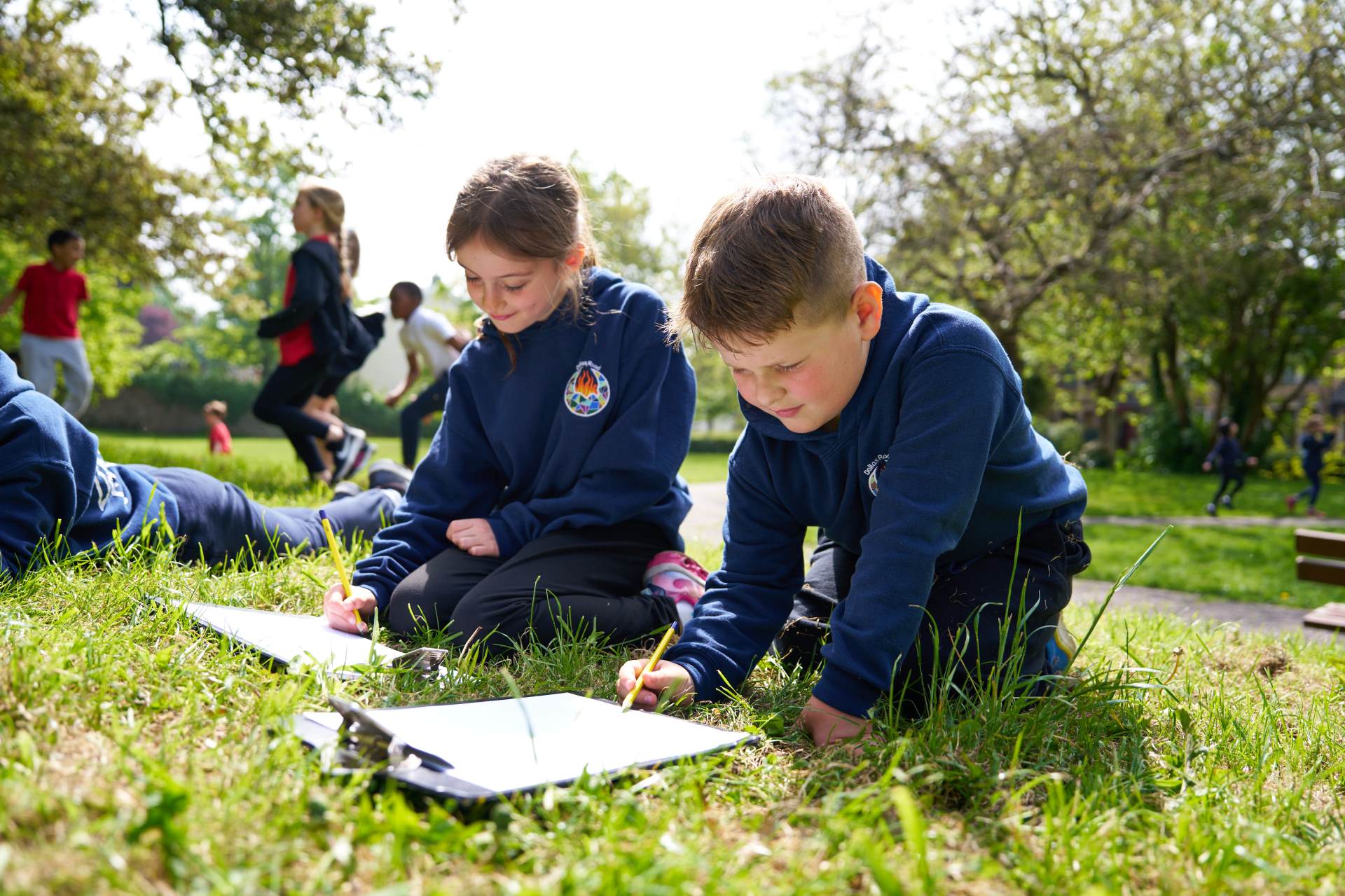
- Writing development is rooted in strong oral language; children rehearse ideas verbally before writing through oral storytelling, play and discussion.
- Adults model correct pencil grip, posture, pre-writing patterns which then move onto letter formation. This approach is reflected in their handwriting practice, three times a week.
- We ensure gross and fine motor experiences develop incrementally, starting with sensory explorations and the development of a child’s strength, co-ordination and positional awareness.
- Children access a wide range of mark‑making opportunities both indoors and outdoors. Adults model correct pencil grip, posture, pre-writing patterns which then move onto letter formation. This approach is reflected in their handwriting practice, three times a week using the Write Well scheme.
- Early reading is supported through the ‘Bug Club’ phonics scheme, accredited by the DFE and this is supplemented with ‘Jolly Phonics’ actions and rhymes. Regular training ensures that staff are equipped to teach with the expertise and skills required to promote excellent progress, as well as a love of reading.
KS1/KS2
- English in Key stage one builds directly on the strong foundations established in EYFS, with continued emphasis on communication and language, oracy, phonics and early writing development.
- Regular opportunities for structured talk, including partner talk, group discussion, drama and role‑play.
- Decodable reading books are fully aligned with the phonics scheme to ensure children practice and consolidate taught sounds.
- All children enjoy taking part in whole class guided reading sessions, which focus on key skills for reading using the VIPERS approach: Vocabulary, Inference, Prediction, Explanation, Retrieval, Sequencing.
- Reading for pleasure is actively promoted through daily opportunities to read, daily adult to child reading, access to high quality reading areas and a carefully planned reading spine reflecting a range of diverse texts.
- English lessons include a grammar focus using LCC ‘Key learning in Writing’. This is presented to children through the ‘IMODEL’.
- Oracy continues to be developed through carefully planned structured talk opportunities within lessons and use of sentence stems and modelled language.
- Adaptive teaching approaches are embedded within lessons, alongside oracy strategies such as ‘Agree, Build, Challenge’, ‘Think, Pair, Share’ and ‘Cold Call’ to support discussion and deepen understanding.
- Learning is appropriately adapted to meet the needs of all children, with scaffolds such as substitution grids, word banks, and sentence starters provided to support access and independence.
- Writing opportunities are planned with a ‘purpose and audience’s mind, to inspire children to write with motivation.
- Throughout school, we have a high-quality reading spine that engages and inspires children to read and write. High quality home reading books also enable the children to share exciting stories in their home environment.
- The school library is a valued resource that supports reading for pleasure and curriculum learning and is regularly reviewed to ensure it remains engaging, inclusive and relevant. Stock is routinely checked, replenished and updated to reflect high-quality texts, diverse authors and current interests, ensuring all children have access to a broad and inspiring range of genres: fiction, non-fiction and poetry.
- When planning English lessons, teachers make links to other areas of the curriculum to ensure that cross curricular links provide further context for learning. Lesson sequences build progressively towards an extended piece of writing.
- Handwriting is taught three times a week in EYFS and KS1, and twice a week in KS2. Year groups follow the scheme - ‘Write Well’.
- Proofreading and editing skills are developed within English lessons, where children are supported to review their work continually. They check for grammatical accuracy and key features against shared success criteria created collaboratively as a class.
- Teachers use targeted highlighting to guide pupils in proofreading their work and to reinforce successful writing behaviours.
- Spelling is taught consistently across the school supported by ‘Spelling Shed’ from year two, which provides a structured and progressive approach in line with National Curriculum expectations.
Impact
The organisation of our diverse, challenging and bespoke English curriculum has created a community of enthusiastic readers, writers and confident communicators who enjoy showcasing their developing literacy knowledge and skills. Children demonstrate strong reading, writing and oracy skills, alongside increasing their resilience, independence and pride in their work.
Our curriculum ensures that children:
- Develop a lifelong love of reading, writing and language
- Read fluently and with good understanding
- Write clearly, accurately and for a range of purposes and audiences
- Communicate effectively, articulating ideas with confidence and clarity
- Build resilience and independence as learners
We provide:
- Quality and consistency in teaching and learning across the school
- A secure foundation, particularly in early reading, phonics and writing
- A strong partnership between home and school to support reading and writing development
- Equality of opportunity, ensuring all children can access and succeed in the English curriculum
We measure this by:
- Formative and summative assessments. Work in books will provide the main evidence for teacher assessment. All teachers in KS1 and KS2 will utilise the Lancashire KLIPS (Key Learning Indicators of Progress) Termly PIRA assessments will be used to back up teacher assessment.
- In Year two and Year six, the Teacher Assessment Framework (TAF) will be used alongside the KLIP’s to formulate end of year assessments.
- EYFS children will be assessed by using the Statutory Framework. For all children who have not achieved a good level of development, staff will assess using an amalgamation of Birth to Five and Development Matters.
- Assessment will be ongoing throughout the year by observing children in directed and undirected tasks.
- English monitoring through pupil/staff voice, planning and work scrutiny and lesson observations.
- English subject leader will review the English curriculum to ensure it is ambitious.
- Plans are modified/adapted and teachers ensure all lessons meet every child’s individual needs through Quality First Teaching (Assess, Plan, Do, Review)
Helping Your Child with Reading At Home